Modern warehouses and industrial facilities are evolving rapidly. The rise of e-commerce, global logistics, and automated material handling has significantly increased the demand for faster, safer, and more efficient warehouse operations. At the center of these operations are forklifts and industrial vehicles, which play a critical role in transporting goods, loading pallets, and supporting day-to-day logistics activities.
However, as warehouse environments become more crowded and operational demands continue to increase, forklift safety has become a major concern for businesses worldwide. Limited visibility, blind spots, narrow aisles, and human error can easily lead to collisions, damaged goods, operational delays, or serious workplace injuries.
To address these challenges, many warehouses and industrial operators are turning to forklift camera systems. These advanced vehicle monitoring solutions are transforming forklift operations by improving visibility, enhancing driver awareness, and supporting safer material handling in complex industrial environments.
Today, forklift cameras are no longer considered optional accessories. They are rapidly becoming essential tools for modern warehouse safety and operational efficiency.
The Visibility Challenges in Forklift Operations
Forklifts are designed to lift and transport heavy loads efficiently, but their structure often creates serious visibility limitations.
Common operational challenges include:
- Large cargo blocking the driver’s forward view
- Blind spots behind and beside the forklift
- Narrow warehouse aisles
- Crowded loading zones
- Poor lighting conditions
- High shelves and elevated cargo handling
- Pedestrians sharing workspaces with vehicles
In busy warehouses, even a small visibility mistake can result in:
- Product damage
- Equipment collisions
- Warehouse downtime
- Worker injuries
- Expensive repair costs
Traditional mirrors alone are often insufficient in modern warehouse environments. This is where forklift camera systems provide significant advantages.
What Is a Forklift Camera System?
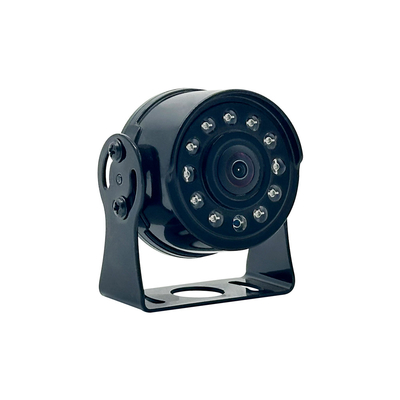
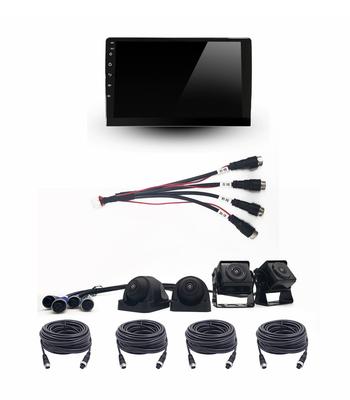
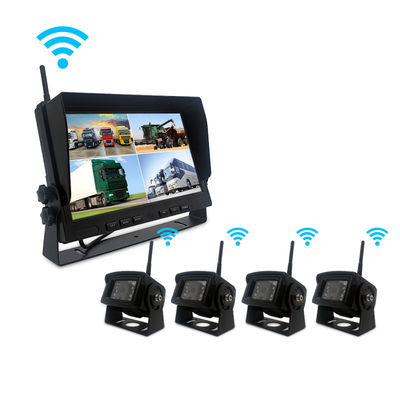
A forklift camera system uses one or multiple cameras installed around the vehicle to provide real-time visual monitoring for operators.
These systems typically include:
- Front fork cameras
- Rear view cameras
- Side view cameras
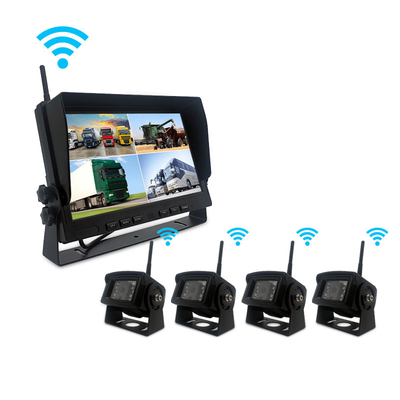
- Wireless monitoring systems
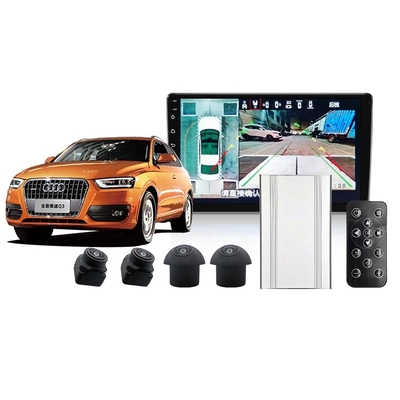
- 360° surround view camera systems
The camera feeds are displayed on monitors mounted inside the forklift cabin, helping operators clearly see blind spots, cargo positions, and surrounding obstacles.
Some advanced systems also integrate AI technology, collision warning functions, and recording capabilities for improved warehouse safety management.
Key Types of Forklift Camera Systems
1. Fork Cameras
Fork cameras are installed near the forks to help operators accurately position pallets during loading and unloading.
Benefits
- Improves pallet alignment accuracy
- Reduces product damage
- Speeds up cargo handling
- Minimizes operator fatigue
Fork cameras are especially useful when lifting goods to high storage racks where direct visibility is limited.
2. Rear View Cameras
Rear cameras help forklift operators reverse safely in crowded warehouse environments.
Advantages
- Eliminates rear blind spots
- Reduces reversing accidents
- Improves awareness of nearby workers and equipment
- Enhances maneuverability in tight spaces
Rear cameras are essential in warehouses where forklifts frequently move backward while transporting large loads.
3. Side View Cameras
Side cameras improve visibility when operating in narrow aisles or around warehouse corners.
Main Functions
- Blind spot monitoring
- Safer turning operations
- Better awareness in congested areas
These cameras are increasingly important in high-density storage facilities.
4. 360° Surround View Systems
One of the most advanced developments in industrial vehicle monitoring is the 360° forklift camera system.
Using multiple cameras positioned around the forklift, the system creates a bird’s-eye view of the vehicle and its surroundings.
Benefits of 360° Systems
- Complete visibility around the forklift
- Reduced collision risk
- Improved navigation in narrow spaces
- Enhanced operational precision
- Better pedestrian safety
360° systems are particularly valuable in large warehouses, logistics centers, and manufacturing facilities where operational complexity is high.
The Role of AI in Forklift Safety
Modern forklift camera systems are becoming smarter through artificial intelligence integration.
AI-powered features may include:
- Pedestrian detection
- Collision warning systems
- Obstacle recognition
- Blind spot alerts
- Driver behavior monitoring
For example, if a worker enters the forklift’s blind zone, the system can immediately trigger an audio or visual warning to alert the operator.
AI technology transforms forklift cameras from passive monitoring tools into proactive safety systems.
Wireless Forklift Camera Systems
Traditional wired camera systems can be difficult to install on industrial vehicles because forklifts constantly move, vibrate, and operate in dynamic environments.
Wireless WiFi forklift cameras offer several advantages:
- Faster installation
- Reduced cable damage
- Easier maintenance
- Flexible camera positioning
- Simplified retrofitting for older forklifts
Wireless systems are becoming increasingly popular in modern warehouses because they improve flexibility while reducing downtime.
Conclusion
Forklift camera systems are transforming modern warehouse operations by improving visibility, enhancing driver awareness, and supporting safer material handling. From simple rear view cameras to advanced AI-powered 360° monitoring systems, these technologies are helping industrial vehicles operate more safely and efficiently in increasingly complex environments.